North Texas home cleaning hard water red clay pollen is best achieved by using acidic solutions like vinegar for mineral spots, employing high pressure washing for stubborn soil stains, and regularly replacing HVAC filters to manage seasonal buildup. These methods effectively neutralize regional challenges like mineral-rich water and iron-heavy soil to keep homes pristine.
Living in North Texas often feels like a constant battle against the local elements. Homeowners here are intimately familiar with the frustration of scrubbing stubborn red clay from entryways, chipping away at calcium buildup on expensive fixtures, and dusting surfaces only to find a fresh layer of yellow pollen hours later. These environmental factors are more than just minor inconveniences; they are persistent stressors that can permanently damage your home’s surfaces and degrade your indoor air quality. At Solutio Purgationis, we believe that maintaining a pristine residence requires a specialized approach tailored to our unique geography. This guide provides an expert breakdown of how to neutralize the 'Dirty Three.' You will learn professional strategies for removing mineral deposits, lifting iron-rich soil, and mitigating the effects of the relentless Texas wind to restore your home to its intended state of refinement.
The Unique Cleaning Challenges of North Texas: Meet the Dirty Three
Homeowners in Celina, Prosper, and McKinney often find that standard maintenance routines fail to keep pace with the local environment. In North Texas, we contend with a specific trifecta known as the Dirty Three: iron-rich red clay soil, mineral-heavy hard water, and aggressive seasonal pollen. While national cleaning franchises often apply a generic checklist to every zip code, Solutio Purgationis Cleaning Services LLC approaches your environment as a veteran-owned local expert familiar with the unique chemistry of Texas soils.
High-velocity winds across the plains of Denton and Aubrey transport fine clay particles directly into your living spaces, where they lodge in porous surfaces. Simultaneously, the hard water common in McKinney and Plano leaves stubborn calcium deposits on fixtures that can become permanent if not treated correctly. Humidity further complicates these issues by causing airborne pollen to adhere to walls and baseboards, creating a grime that resists simple dusting. Dealing with these North Texas home cleaning hard water red clay pollen issues requires more than a surface wipe. Our team utilizes specialized eco-friendly methods and professional-grade equipment to neutralize these specific regional threats. A comprehensive deep cleaning serves as a necessary reset, removing the backlog of minerals and allergens that standard residential cleaning might overlook.
Battling North Texas Red Clay: Prevention and Removal

Red clay in Aubrey, Pilot Point, and Denton is not merely a nuisance; it is a mineral-rich material heavy in iron oxide. Because these particles are microscopic, they function more like a pigment or dye than typical backyard dirt. When these particles find their way into the porous surfaces of your home, such as grout lines or carpet fibers, they can become a semi-permanent stain if handled incorrectly. The chemistry of the soil makes it particularly aggressive in new construction areas where the protective grass layer has been removed.
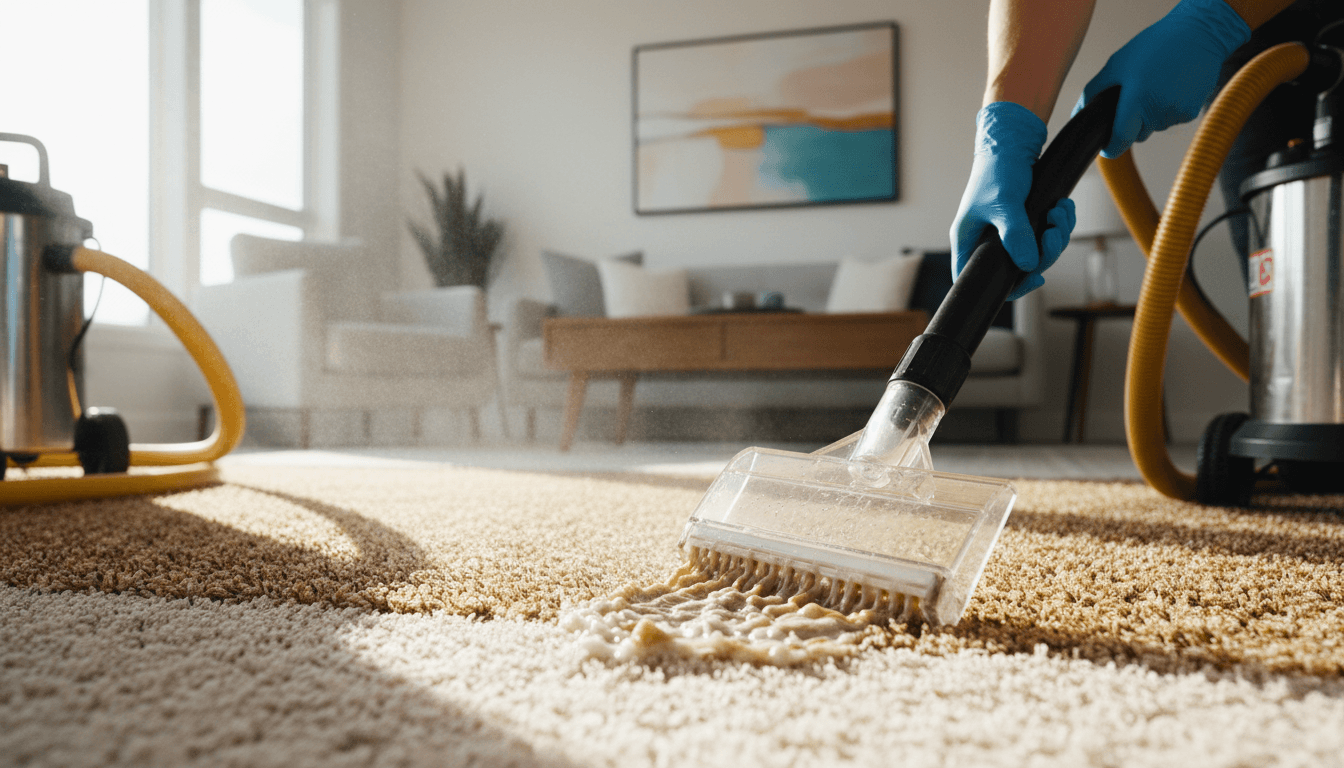
When you notice red tracks on your carpet, the immediate instinct is often to grab a wet cloth and scrub. However, adding water to clay without immediate, high-powered extraction creates a thin slurry that travels deeper into the carpet backing. For grout, the red tint can settle into the cementitious material and resist standard mopping entirely. Successful removal requires a meticulous two-step process: thorough dry HEPA vacuuming to remove loose silt, followed by targeted eco-friendly methods such as professional steam cleaning.
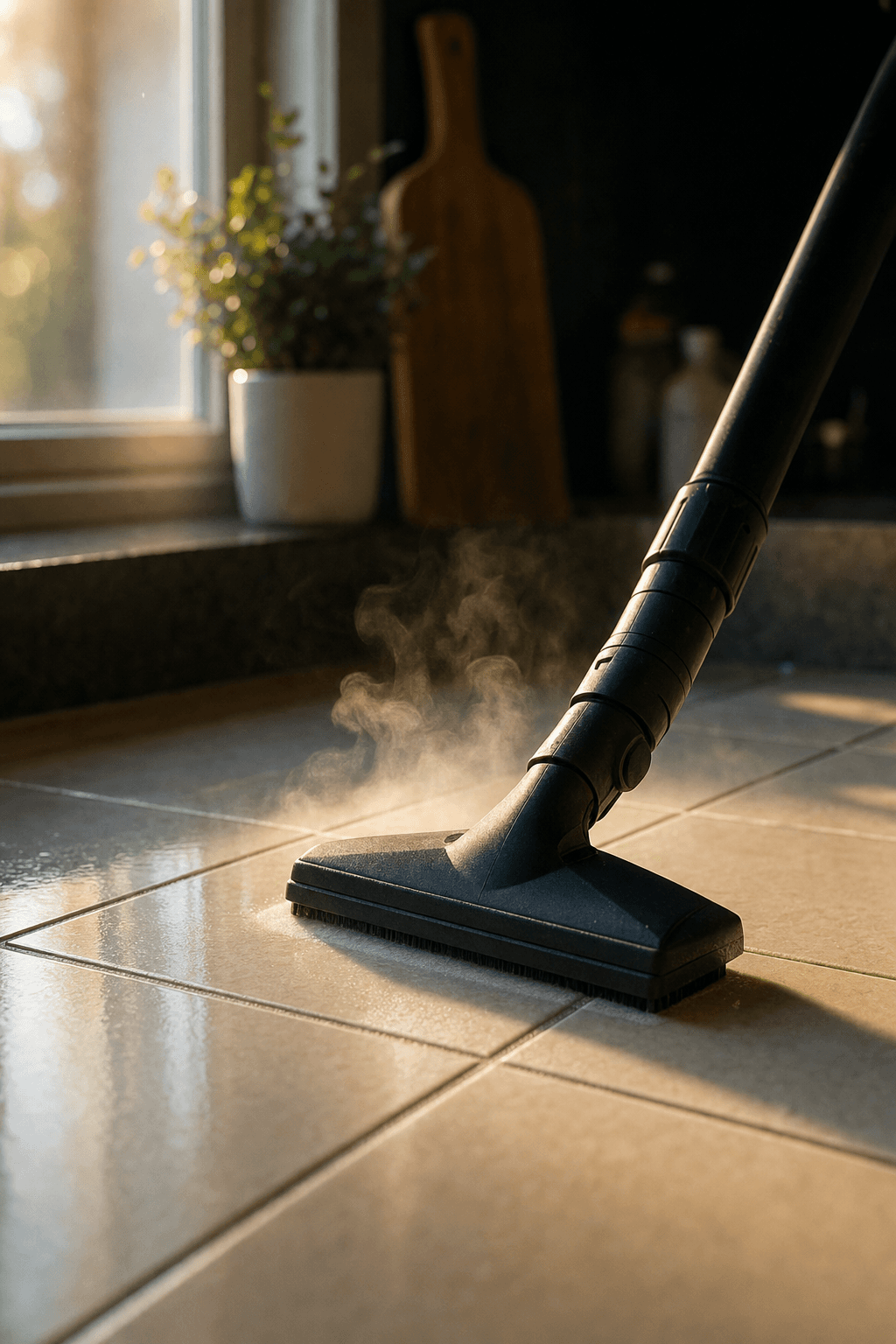
Steam is exceptionally effective for this specific Texas challenge because the pressurized vapor reaches the deepest recesses of the fiber or tile pore, lifting the iron oxide to the surface without the need for harsh chemicals. There is one critical warning for homeowners attempting to manage this: never apply high heat, such as a hair dryer or a high-temperature carpet dryer, until you are certain every particle of clay is extracted. The iron oxide in the soil reacts to heat by baking into the material, which can permanently set the red hue into your flooring.
Our residential cleaning protocols focus on mechanical extraction rather than just surface masking. This is why a deep cleaning is required for our first-time clients; it allows us to address the North Texas home cleaning hard water red clay pollen cycle at the source. By utilizing industrial-grade steam and HEPA filtration, we remove the abrasive clay particles that act like sandpaper on your floor's finish, ensuring the structural integrity of your home's surfaces is maintained.
Eliminating Hard Water Stains and Calcium Deposits from Texas Faucets

While the red clay of Aubrey and Pilot Point attacks your floors, the municipal water supply in Plano and McKinney presents a chemical challenge to your fixtures. North Texas water is categorized as hard due to high concentrations of dissolved calcium and magnesium. When water sits on a faucet or showerhead and evaporates, these minerals undergo a phase change, leaving behind solid calcium carbonate. Over time, these deposits crystallize into a rock hard crust that bonds to chrome and stainless steel surfaces; this eventually restricts water flow and dulls the finish.
Many homeowners ask, "Will vinegar damage the finish on a faucet?" The answer depends on the material and the duration of exposure. Vinegar is a mild acetic acid that effectively dissolves mineral bonds, but it is not a universal solution. On modern finishes like matte black, oil rubbed bronze, or gold, the acid can etch the protective coating if left too long. For standard chrome, a diluted vinegar soak is generally safe for up to 15 minutes, but prolonged contact can lead to permanent pitting or discoloration.
Feature | DIY Vinegar Approach | Professional Eco-Friendly Descaling |
|---|---|---|
Active Ingredient | Acetic Acid (Variable strength) | pH-balanced organic acids |
Precision | Difficult to control runoff | Targeted application via gel or foam |
Safety | Risk of etching sensitive finishes | Formulated for specific metal alloys |
Speed | Requires long dwell times | Rapidly breaks mineral bonds |
At Solutio Purgationis, we elevate the descaling process by using specialized eco-friendly methods that are more efficient than household vinegar. Our professional grade descalers are designed to break the molecular bond of the calcium without compromising the integrity of the underlying metal. This level of detail is a core component of our deep cleaning protocol. By removing these mineral reservoirs, we prevent the rapid re-accumulation of grime, ensuring your fixtures maintain their luster as part of a recurring residential cleaning schedule. This chemical reset is essential for managing the long term effects of the North Texas home cleaning hard water red clay pollen cycle.
Managing Pollen and Allergens in the Lone Star State

Texas residents frequently ask, "What is causing allergies right now in Texas?" The answer shifts with the calendar; from the notorious "cedar fever" caused by mountain cedar in the winter to the heavy ragweed of autumn and the thick oak pollen of spring. These microscopic invaders do not remain outdoors. They hitch rides on clothing, pets, and enter through open windows, settling into every surface of your home. Managing this specific phase of the North Texas home cleaning hard water red clay pollen cycle requires a strategy focused on containment rather than just appearance.
Effective allergen removal depends heavily on the quality of equipment used. Standard household vacuum cleaners often lack the airtight seals necessary to trap fine particulates, effectively acting as pollen cannons that exhaust microscopic allergens back into your breathing zone. Solutio Purgationis utilizes industrial-grade HEPA filtration as a core component of our residential cleaning. This technology is designed to capture 99.97% of particles as small as 0.3 microns, ensuring that once pollen enters the canister, it is permanently removed from your environment.
To clean allergens from a house successfully, we employ a strict top to bottom dusting methodology. This systematic approach begins at the highest points of a room, such as ceiling fan blades, door frames, and crown molding, and works down to the baseboards. By using damp microfiber cloths and eco-friendly methods, we physically trap the pollen instead of pushing it into the air. For homes in Prosper or Celina that have accumulated a significant seasonal load, a deep cleaning is the only way to provide a true environmental reset, clearing the backlog of irritants that regular dusting often overlooks.
Why Your House Gets Dusty So Fast: The Texas Wind Factor
The persistent North Texas wind acts as a conveyor belt for particulates, especially in rapidly developing suburbs like Celina and Prosper. If you find yourself asking, "Why does my house get dusty so fast?", the answer lies in a combination of high-velocity gusts and the constant soil displacement from nearby construction sites. This fine silt, a key component of the North Texas home cleaning hard water red clay pollen cycle, enters through microscopic gaps in window seals and door frames before settling into your living space.
While HVAC professionals often suggest higher-rated filters to solve this problem, filtration only captures what is currently airborne. It does nothing to address the dust reservoir already sitting on your baseboards, shelving, and soft surfaces. Once these particles settle, every footstep or ceiling fan rotation lofts them back into the air, creating a loop of constant contamination. True remediation requires the physical extraction methods we use in our residential cleaning services.
We utilize damp microfiber technology and pressurized steam to trap and remove dust rather than just displacing it. Unlike dry dusting, which often releases finer particles back into the room, eco-friendly methods like steam cleaning sanitize and bind the dust for total removal. For homes that have seen significant accumulation, a deep cleaning is the only way to clear the existing load and stop the cycle of constant recirculation.
The Professional Deep Clean: Resetting Your Home's Environment
Surface-level dusting and standard maintenance visits cannot overcome months of accumulated local minerals and construction silt. This is why Solutio Purgationis requires a deep cleaning for every first-time client. This initial service functions as a complete environmental reset, or a physical reboot, for the residence. It clears the existing backlog of the North Texas home cleaning hard water red clay pollen cycle that has settled into the home's infrastructure over time.
Our specialized equipment provides a level of decontamination that exceeds the capabilities of a standard residential cleaning. We utilize pressurized steam to penetrate the microscopic pores of tile, grout, and upholstery. This process emulsifies the oils and sticky residues that cause pollen and clay to bond to surfaces. Simultaneously, our industrial HEPA filtration systems capture 99.97% of particulates, ensuring that fine dust and allergens are extracted from the air and surfaces rather than being redistributed.
Cleaning Component | Standard Maintenance | Professional Deep Clean (Initial) |
|---|---|---|
Silt/Clay Removal | Surface wipe | Deep steam extraction |
Mineral Deposits | Maintenance buffing | Chemical bond deconstruction |
Air Quality | Basic vacuuming | Sealed HEPA decontamination |
Surface Goal | Maintain baseline | Restore to original condition |
As a veteran-owned company, we recognize that trust is the foundation of our service in Prosper and Celina. Establishing a clean baseline through this mandatory deep clean allows us to guarantee the quality of all subsequent visits. We back this commitment with a 100% satisfaction guarantee, ensuring that our eco-friendly methods deliver a home environment that is not just visually tidy, but truly decontaminated at a molecular level.
Mastering the North Texas Dirty Three requires the right tools and a consistent routine to prevent buildup over time. While these DIY methods are effective, keeping your home pristine amidst constant pollen and red clay can be a demanding task. If you would prefer to leave these stubborn messes to the experts, we are always ready to help. Our dedicated Residential Cleaning services offer a comprehensive solution tailored to your home. We can handle the deep scrubbing while you simply enjoy the results.